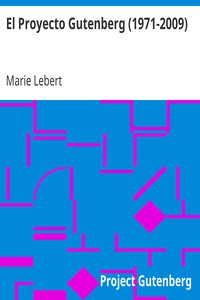
El Proyecto Gutenberg (1971-2009) by Marie Lebert
Forget sleek Silicon Valley startups. El Proyecto Gutenberg (1971-2009) by Marie Lebert is the origin story of the digital library, and it begins with a single, simple act. In 1971, a student named Michael Hart was given computer time at the University of Illinois. Instead of running calculations, he typed the text of the U.S. Declaration of Independence. His goal? To make important cultural works freely available to anyone with a computer. That text file was "Etext #1," and Project Gutenberg was born.
The Story
The book isn't a dry tech manual. Lebert follows the project's life, from Hart typing alone to a global network of volunteers. We see the early days of distributing books via floppy disks and early internet forums. The plot thickens as the project grows. How do you coordinate hundreds of people proofreading texts across different time zones? How do you handle complex copyright issues for works published in different countries? The story is one of constant adaptation—battling obsolete file formats, seeking donations to keep servers running, and always championing the radical idea that literature should be free.
Why You Should Read It
I loved this because it's a human story, not a tech story. Michael Hart isn't portrayed as a flawless genius, but as a determined, sometimes difficult visionary. The real stars are the volunteers—librarians, retirees, students—who spent countless hours scanning and correcting texts for no reward other than sharing knowledge. It makes you look at every free ebook you've ever downloaded with new respect. Lebert captures the spirit of the early internet, where things were built on goodwill and a shared belief in a common good.
Final Verdict
This is a must-read for anyone who loves books, history, or the internet. It's perfect for readers curious about how our digital world was built, piece by piece, by idealists. If you've ever benefited from a free classic online, this book is the fascinating, heartfelt backstory. It’s a reminder that some of the most important parts of our culture online were created not for profit, but for love.
This content is free to share and distribute. It is now common property for all to enjoy.
Richard Johnson
7 months agoRead this on my tablet, looks great.