
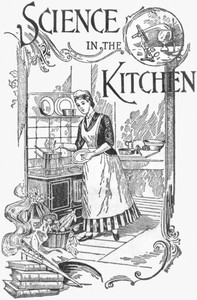
Science in the Kitchen by E. E. Kellogg
Published in 1893, Science in the Kitchen is not your typical cookbook. Ella Ervilla Kellogg, wife of Dr. John Harvey Kellogg and superintendent of the Battle Creek Sanitarium's vast kitchens, wrote it as a textbook for a new way of eating. The book is built on the belief that cookery should be guided by scientific principles of chemistry, nutrition, and physiology to promote health and prevent disease.
The Story
There isn't a narrative plot with characters. Instead, the 'story' is Ella Kellogg's methodical argument for dietary reform. The book first lays down the law of digestion and nutrition—explaining how the body uses food. Then, it dives into the 'science' of preparing it. Hundreds of recipes follow, from breads and soups to meatless roasts and simple desserts, all designed to be easily digestible and nutritious. It's a complete system, covering everything from how to set up a sanitary kitchen to how to plan a week's worth of balanced, vegetarian menus. The core idea is that intelligent cooking can cure and prevent the 'dyspepsia' (indigestion) that plagued so many in the Gilded Age.
Why You Should Read It
I found this book utterly captivating. It completely reframes Ella Kellogg not as a footnote to her famous husband, but as a serious practitioner and educator in her own right. Her voice is clear, confident, and sometimes surprisingly witty. Reading her precise instructions for making 'nut butter' or her warnings against using baking soda too freely feels like getting a direct line to the birth of modern nutritional thinking. You see the origins of ideas we take for granted today: eat more fiber, choose whole grains, limit heavy fats. It's also a window into a specific time and place—the optimistic, reform-minded world of the Battle Creek Sanitarium, where food was seen as the front line of health.
Final Verdict
This book is a treasure for a specific reader. It's perfect for history buffs, especially those interested in women's history, medicine, or the Gilded Age. Foodies and culinary historians will geek out over the antique recipes and techniques. If you're into vintage homemaking manuals or the early wellness movement, you'll find it fascinating. A word of caution: it's not a light read or a practical modern cookbook. But if you want to understand where our obsession with 'eating right' began, and meet one of its pioneering female architects, Ella Kellogg's Science in the Kitchen is an essential and surprisingly engaging document.
There are no legal restrictions on this material. You do not need permission to reproduce this work.
Donald Martin
4 months agoVery helpful, thanks.
David Scott
11 months agoVery interesting perspective.




Linda King
1 year agoSimply put, the plot twists are genuinely surprising. A true masterpiece.