
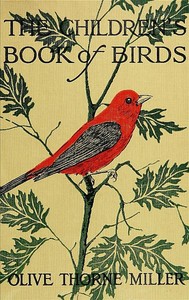
The Children's Book of Birds by Olive Thorne Miller
Originally published in 1899, The Children's Book of Birds by Olive Thorne Miller is exactly what the title promises: an introduction to our feathered friends meant for young readers. But don't let that fool you—its warmth and careful observation have plenty to offer curious adults, too.
The Story
There isn't a single plot in the traditional sense. Instead, the book is structured as a series of friendly chapters, each one focusing on a different common American bird. Miller acts as our guide, introducing us to the Bluebird, the Robin, the Chickadee, and many more. She doesn't just tell us what they look like. She describes where they live, what they eat, how they build their nests, and how they care for their babies. She writes about bird songs, migration, and the challenges birds face from weather and other animals. It's a full picture of a bird's life, told with a sense of wonder and a deep respect for her subjects.
Why You Should Read It
What makes this old book special is its voice. Miller writes with a personal, almost conversational tone. She shares little anecdotes from her own observations, making you feel like you're on a walk with her. She assigns birds relatable traits—the Blue Jay is a noisy guardian, the House Wren is a feisty little homeowner—which helps you remember facts and feel a connection. Reading it, you realize how much careful, patient watching went into her writing. It's a book that doesn't just want you to identify birds; it wants you to understand them and grow to care about their well-being. In our fast-paced world, it’s a gentle nudge to appreciate the quiet, complex lives happening all around us.
Final Verdict
This book is a sweet, timeless gem. It's perfect for parents or grandparents to share with kids who show an interest in nature. It's also great for any beginner birdwatcher who wants a narrative-driven start before diving into modern field guides. Because it's from a different time, some of the scientific details are outdated, and the species focus is North American. But the core message—to observe, learn, and develop a sense of stewardship for wildlife—is as important as ever. If you enjoy quiet, descriptive nature writing that feels like a friendly chat, you'll find a lot of joy in these pages.
This book is widely considered to be in the public domain. You are welcome to share this with anyone.
Sarah Wilson
11 months agoHaving read this twice, it challenges the reader's perspective in an intellectual way. I couldn't put it down.
Patricia Robinson
1 year agoVery helpful, thanks.
Nancy King
1 year agoRead this on my tablet, looks great.
Edward Smith
5 months agoPerfect.








Ava Scott
1 year agoSurprisingly enough, it creates a vivid world that you simply do not want to leave. A true masterpiece.