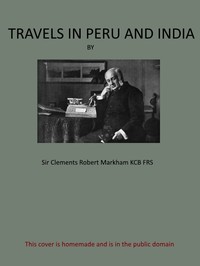
Travels in Peru and India by Sir Clements R. Markham
Sir Clements Markham’s book is really two distinct adventures bound in one cover, following his younger self across the globe at pivotal moments.
The Story
The first half follows Markham’s early career. In the 1850s, the British Empire was losing countless soldiers and colonists to malaria. The cure, quinine, came from the bark of South American cinchona trees, but Peru and Bolivia had a tight grip on the supply. Markham was recruited for a daring mission: travel to Peru, identify the best trees, collect seeds and seedlings, and sneak them out to establish plantations in India. It was a high-stakes race against rival collectors and local laws.
The second half jumps to 1857-58. Now a naval officer, Markham finds himself in India during the massive uprising against British rule. His account shifts from botanical thriller to war chronicle. He describes the siege of Lucknow, the brutal reprisals, and the everyday realities of a collapsing order. It's a stark, personal view of a violent historical rupture.
Why You Should Read It
What makes this book stick with you is the jarring contrast. You get the almost boyish excitement of the plant hunt—the disguises, the treacherous mountain passes, the triumph of getting the living plants onto a ship. Then, with no pause, you’re plunged into the grim reality of what the Empire was doing in its colonies. Markham doesn’t often stop to moralize; he just reports what he saw. That directness is powerful. You see the mindset of a man of his time: proud of his botanical success, loyal to the Crown during the rebellion, yet occasionally letting glimpses of the human suffering shine through. It’s a complex, unvarnished look at how empire-building actually worked on the ground.
Final Verdict
This is perfect for anyone who loves real-life adventure stories with layers. If you enjoyed books like The River of Doubt or King Leopold's Ghost, you’ll find a similar blend of exploration and sobering history here. It’s not a light read, but it’s a fascinating one. You’ll come for the tale of botanical smuggling and stay for the raw, firsthand account of a world in violent transition. Just be prepared to sit with some uncomfortable truths along the way.
This publication is available for unrestricted use. You can copy, modify, and distribute it freely.