
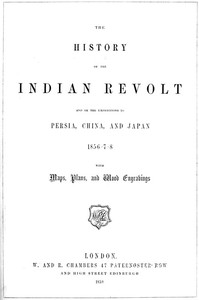
The History of the Indian Revolt and of the Expeditions to Persia, China and…
George Dodd's book is a massive, detailed chronicle of a pivotal moment. Published in 1859, it was written almost in real-time, capturing the shock and urgency of events that were still fresh in public memory.
The Story
The main event is the Indian Rebellion of 1857, often called the Sepoy Mutiny. Dodd walks us through the whole thing. He starts with the simmering tensions—the new rifle cartridges rumored to be greased with animal fat offensive to Hindu and Muslim soldiers, the general distrust of British rule. Then the spark ignites in Meerut, and the rebellion explodes across northern India. Dodd describes the key battles and infamous sieges, like the one at Lucknow, where British civilians and soldiers were trapped for months. He doesn't shy away from the violence on both sides. The second part of the book shifts to other British military campaigns happening simultaneously: in Persia (modern-day Iran) and the Second Opium War in China. This structure itself tells a story—it shows an empire trying to project power on multiple fronts while its most important colony is in flames.
Why You Should Read It
This isn't a balanced, modern history textbook. That's what makes it so valuable. You're getting the British view, full stop. You feel the fear, the outrage, and the imperial confidence being severely shaken. Reading Dodd is like listening to a very well-informed, but decidedly partisan, reporter from the 1850s. You have to read between the lines, but that's where the real insight lies. You see how the British justified their actions, how they viewed the people they ruled, and how a crisis was communicated to the public back home. The addition of the Persia and China sections is brilliant because it adds crucial context—it wasn't just India; this was a global imperial moment fraught with danger.
Final Verdict
Perfect for history buffs who are tired of sanitized summaries and want to feel the gritty reality of the past. It's also great for anyone interested in colonialism, journalism, or how stories are told in the immediate aftermath of a war. Be warned: it's a product of its time, with all the outdated attitudes that implies. But if you can approach it as a primary source—a compelling, flawed, and utterly fascinating eyewitness account—you'll be rewarded with a perspective no modern historian can fully replicate. This is history with the dust still on its boots.
This historical work is free of copyright protections. You are welcome to share this with anyone.
Noah Anderson
4 months agoThanks for the recommendation.
Donald Lopez
1 year agoI was skeptical at first, but the flow of the text seems very fluid. Highly recommended.
Brian Taylor
3 months agoClear and concise.




Donald Lewis
5 months agoThe layout is very easy on the eyes.