
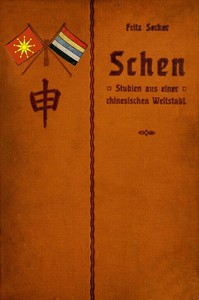
Schen: Studien aus einer chinesischen Weltstadt by Fritz Secker
Fritz Secker’s Schen is a time capsule. Published in 1929, it collects his studies and impressions of Shanghai from the early 20th century. There’s no single narrative driving the book forward. Instead, think of it as a series of vivid snapshots. Secker acts as your guide, leading you from the bustling international settlements along the Huangpu River to the quieter, traditional Chinese districts. He describes the architecture, the daily rhythms of work, the markets, and the complex social layers of a city where East and West lived side-by-side, but not always together.
The Story
There isn’t a traditional plot. The ‘story’ is Shanghai itself. Secker structures his book like a walking tour. One chapter might focus on the chaotic energy of the docks, with sailors and merchants from across the globe. The next could be a quiet observation of a tea house or a description of a local festival. He writes about the new technologies like trams and telephones bumping up against centuries-old customs. The central thread is his attempt to understand this ‘Chinese world city’—not as a politician or a businessman, but as a curious observer capturing a moment in time.
Why You Should Read It
What makes this book special is its perspective. This isn’t a grand historical analysis. It’s ground-level. You get the smells, the overheard conversations, the feel of the place. Secker doesn’t claim to have all the answers about China; he’s honestly documenting his confusion and fascination. Reading it today, with our knowledge of everything that came after for Shanghai, adds a powerful layer of poignancy. You’re seeing a city on the brink of enormous change, frozen in the words of a temporary resident. It’s humbling and deeply interesting.
Final Verdict
Perfect for history buffs, travel writing enthusiasts, or anyone with a soft spot for Shanghai. If you love books that transport you to another time and place through personal detail, you’ll find Schen captivating. Be warned: it’s not a fast-paced novel. It’s a slow, observational stroll. But if you’re willing to take that walk with Fritz Secker, you’ll be rewarded with a portrait of a legendary city that feels incredibly immediate, even a century later.
This text is dedicated to the public domain. You can copy, modify, and distribute it freely.
Jessica Thomas
1 month agoHigh quality edition, very readable.
Mary Robinson
4 months agoClear and concise.


Richard Sanchez
7 months agoI stumbled upon this title and it challenges the reader's perspective in an intellectual way. Definitely a 5-star read.