
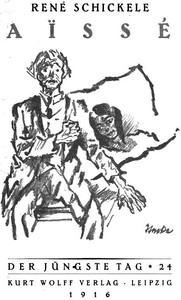
Aïssé by René Schickele
Let me tell you about Aïssé. This isn't a traditional novel with a clear beginning, middle, and end. Instead, Schickele presents her life through a series of fictionalized letters, mostly written by Aïssé herself to a friend. We meet her as a fixture in the dazzling Parisian salon of Madame de Tencin, a world of philosophers, writers, and aristocrats. Aïssé is celebrated for her beauty and intellect, but her past is always there. She was taken from her homeland as a child, given as a 'gift,' and her freedom is precarious, tied to the whims of her guardians.
The Story
The plot follows her internal journey more than external events. We see her navigate friendships, fall into a deep and forbidden love with a French knight, and constantly wrestle with her status. She's part of this elite circle, yet forever marked as an outsider. The letters are brilliant because they show her dual perspective: she's both an insider critiquing the frivolity and corruption around her, and an outsider longing for a true home she can barely remember. The tension builds not from action, but from her growing desire for autonomy—over her heart, her life, and her future—in a society that sees her as an object.
Why You Should Read It
I was completely drawn in by Aïssé's voice. Schickele makes her feel startlingly modern. Her observations about French society are sly and sharp. She's not a passive victim; she's a thinker, full of melancholy, humor, and a fierce will. The book quietly asks big questions about freedom, belonging, and what it costs to be yourself when the world has already labeled you. It's also a fascinating, human-scale look at the 18th century, away from the kings and battles, right in the drawing rooms where ideas about love and liberty were being debated.
Final Verdict
This is a perfect pick for readers who love immersive historical fiction focused on complex characters rather than epic plots. If you enjoyed the intimate feel of something like The Princesse de Clèves or the nuanced exploration of a constrained life in Pachinko, you'll find a friend in Aïssé. It's for anyone who believes the most compelling stories are often about the search for a place to call your own.
This book is widely considered to be in the public domain. You can copy, modify, and distribute it freely.
Carol Martinez
1 year agoGreat digital experience compared to other versions.



Michael Hill
10 months agoA must-have for anyone studying this subject.