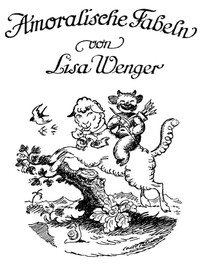
Amoralische Fabeln by Lisa Wenger
Lisa Wenger's 'Amoralische Fabeln' (Amoral Fables) is exactly what the title promises: a collection of animal stories that pointedly avoid delivering a clear moral lesson. Published in the early 20th century, these brief tales upend the classic fable structure we all know.
The Story
There isn't one continuous plot. Instead, think of it as a series of short, sharp vignettes featuring familiar archetypes: foxes, wolves, ants, and nightingales. But Wenger's versions don't follow the script. The industrious ant might be mocked for its narrow life. The cunning fox might succeed through trickery and face no consequences. A nightingale's beautiful song might be ignored or misunderstood. Each story presents a slice of animal behavior that feels authentic and often cynical, reflecting the messy, self-interested, and sometimes arbitrary nature of existence rather than a neatly packaged ideal.
Why You Should Read It
What grabbed me was the book's quiet audacity. Reading it feels like having a clever, slightly mischievous friend whisper, "But what if the old story is wrong?" Wenger doesn't preach; she observes. Her animals act on instinct, hunger, or strategy, not to fulfill a moral. This makes the fables feel surprisingly fresh and philosophical. You find yourself questioning why we expect stories to teach us lessons, and whether those lessons always hold up in the complex real world. The prose is clean and vivid, letting the unsettling (or amusing) outcomes speak for themselves.
Final Verdict
This book is perfect for readers who enjoy short stories, philosophical nudges, or classic forms turned on their head. It's great for anyone who's ever felt a fable was too simplistic. Because it's short and separated into standalone pieces, it's also an excellent book for your nightstand or coffee table—something you can dip into for a five-minute brain tickle. Don't expect warm, fuzzy feelings. Do expect to be intrigued, slightly challenged, and to look at the old stories in a completely new light.
This is a copyright-free edition. Preserving history for future generations.
Brian Ramirez
4 months agoWithout a doubt, the plot twists are genuinely surprising. Highly recommended.
Anthony White
1 year agoText is crisp, making it easy to focus.
Robert Rodriguez
11 months agoCompatible with my e-reader, thanks.
Kenneth Perez
1 year agoHelped me clear up some confusion on the topic.

Karen Martin
11 months agoI have to admit, the content flows smoothly from one chapter to the next. Absolutely essential reading.